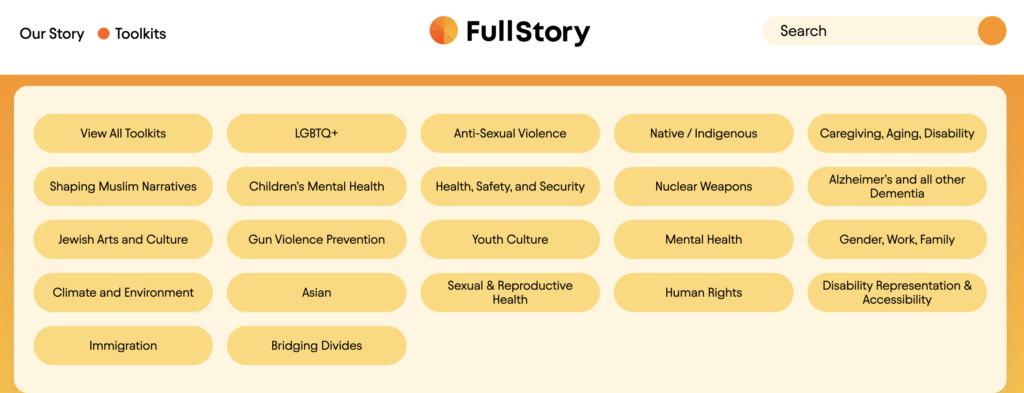


The “Full Story Initiative” is back, and this time it’s built for writers who are actually in the room.
Creative Artists Agency and GLAAD relaunched the initiative on April 29, expanding the original 2021 program into a development-focused digital toolkit designed to integrate directly into the creative process. The platform gives writers and creators access to research, case studies, and subject-matter experts, not after the pitch, not in post, but while the story is being built.
That timing distinction matters.
Most sensitivity consulting happens late, when the architecture of a project is already set, and changes feel like damage control. This tool is designed to move upstream, which is where the decisions that actually shape representation get made.
“What we heard from creators over time was that they wanted something more practical and development-focused,” said CAA executive Dennis St. Rose. “This evolution keeps the same mission but delivers it in a more accessible format, giving writers and creators a working tool they can use quickly as they build stories.”
The partner network has also expanded significantly: New America, the Muslim Public Affairs Council, and Human Rights Watch are now part of the coalition, joining existing collaborators across civil rights, health, and social advocacy organizations. That breadth signals the initiative isn’t positioning itself as a queer-specific tool, but as infrastructure for inclusive storytelling across historically underrepresented communities broadly.
For GLAAD, the commercial framing is deliberate.
“Authentic and inclusive stories succeed with audiences,” said Alex Schmider, GLAAD’s senior director of entertainment. “This will make projects more successful, benefitting the project, the artists behind it, and our communities.” The toolkit explicitly highlights data on audience engagement and community buying power alongside the creative case studies — because in 2026, leading with values alone doesn’t close the argument in a writer’s room budget meeting.
At the launch event, showrunners Justin Spitzer, Patrick Macmanus, and Jeff Davis walked through how advocacy partnerships shaped storytelling decisions on “Superstore,” “Devil in Disguise,” and “Wolfpack.” That framing — working showrunners, completed series, real outcomes — is a direct counter to the industry’s persistent “but how does it actually work in practice” deflection.
The harder question is infrastructure vs. influence.
A toolkit is only as powerful as the writers who have access to it, and access in Hollywood still runs through agency relationships. CAA’s anchoring of this initiative keeps it within the deal-making apparatus, which is both a feature and a design constraint. Writers not repped by CAA can still use the platform — it’s publicly available — but the real muscle behind something like this is whether agents are actively putting it in front of clients at the development stage, not just listing it as a resource.