


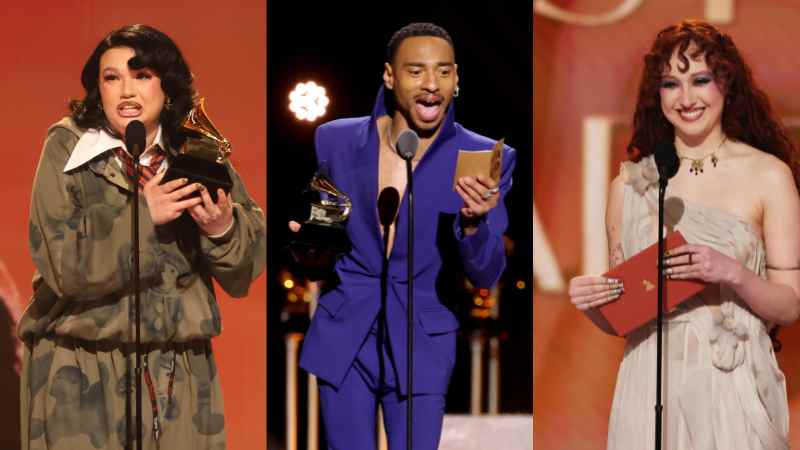
The 68th GRAMMY Awards made something quietly clear: the question of whether queer artists belong in the mainstream music canon isn’t really being asked anymore. Instead, what played out across awards, speeches, and performances was a far subtler negotiation — between visibility, narrative weight, and institutional positioning.
The Recording Academy has successfully positioned the GRAMMYs as one of the few major entertainment institutions where queer artists are not treated as exceptions; this year continued that pattern. The nominations leading up to the show reflected a diverse slate that included queer icons and creative forces alongside genre-spanning stars. That slate set the tone for a night where presence was normalized rather than bracketed.
Queer artists and creatives appeared in multiple categories — across genres that the Academy itself has increasingly embraced as central, not peripheral. From the night’s winners list to the acceptance speeches heard on both the primetime broadcast and the earlier Premiere Ceremony, queer voices were part of the music industry’s most meaningful moments.
Several of those moments, however, didn’t make the primetime cutoff.
Wins and recognition delivered earlier in the evening — whether in genre categories, songwriting credits, or production achievements — showcased talent that may not have been visible to the broader TV audience, even as it shaped the cultural mesh of the night.
Among those celebrated were artists like Durand Bernarr, who took home a Grammy for his work this year, and others whose creative contributions signal an evolving landscape.
Meanwhile, some of the evening’s most powerful moments came from figures whose influence extends beyond any one label or genre. Long-acclaimed performers such as Lady Gaga continued to resonate across categories, collecting awards for projects like “Abracadabra,” which won Best Dance Pop Recording, and underlining the ongoing centrality of queer artistry in mainstream pop.
But the night wasn’t only about queer artists who are already widely recognized. The Best New Artist award went to Olivia Dean, whose ascent reflects the broader expansion of what mainstream pop looks like and who gets to define it.
Onstage speeches also carried weight, with some acceptance moments — whether political, personal, or both — emphasizing solidarity, identity, and lived experience. Statements by artists including Billie Eilish, whose Song of the Year win was paired with remarks about belonging and justice, underscored the ways music and advocacy continue to intersect.
One of the night’s most talked-about figures — and an example of how artists are reshaping mainstream performance aesthetics — was Bad Bunny, who not only won Best Música Urbana Album for DeBÍ Tirar Más Fotos (a landmark Spanish-language record) but also used his stage presence and speech to blend cultural, political, and gender-fluid cues in ways that extend beyond traditional pop staging. The Puerto Rican star’s fashion choices and public persona have long toyed with masculine and feminine signifiers in ways that resonate with queer audiences and allies alike, while his powerful “ICE out” call, delivered from the GRAMMYs stage and echoed by peers like Billie Eilish, underlined how artists are using visibility not just for celebration, but for message and movement.
Taken together, these threads paint a picture of an institution that has moved past the most basic questions of inclusion. The GRAMMYs have normalized queer presence in ways that many legacy award shows have not. They have folded LGBTQ excellence into the fabric of Music’s Biggest Night, so much so that belonging is assumed, not spotlighted.
And yet — that normalization has its contours.
The framing of the primetime telecast still leaned heavily on established names, familiar narratives, and performances from artists whose mainstream identities aren’t wholly defined by queerness, even if their work resonates with queer audiences. At the same time, some of the most progressive, boundary-pushing recognition happened in segments of the awards show that didn’t reach the evening’s largest TV audience.
This isn’t critique so much as structural observation: visibility has been achieved. Authority — the kind that shapes narrative arcs, broadcast priorities, and cultural memory — is still being calibrated.
What the GRAMMYs revealed isn’t hesitancy about relevance, but a measured confidence in how queer artistry fits into the broader music landscape. And in an industry still wrestling with how to balance legacy, innovation, and cultural power, that measured confidence may be the most telling story of all.

